
Finding the allergen
behind the rash
A non-invasive, office-based procedure that helps our dermatologists identify the specific allergens that may cause or contribute to a patient's skin rash.
Allergic contact dermatitis is the itchy skin rash caused by a patient's skin being allergic to a specific substance called an allergen. Poison ivy is the most familiar cause. The itchy rash can present in many ways — cracked and scaling hands and fingers, red and swollen eyelids, thick and flaking rash beneath the belly button, and red and flaking rash in skin folds such as the base of the neck, around the armpits, and in the waistline.
The skin is exposed to hundreds — if not thousands — of allergens, and patients can find it difficult to impossible to find and avoid the allergen or allergens causing their rash, especially since the immune reaction being evaluated causes symptoms up to 48 hours after exposure.
Three visits,
over one week
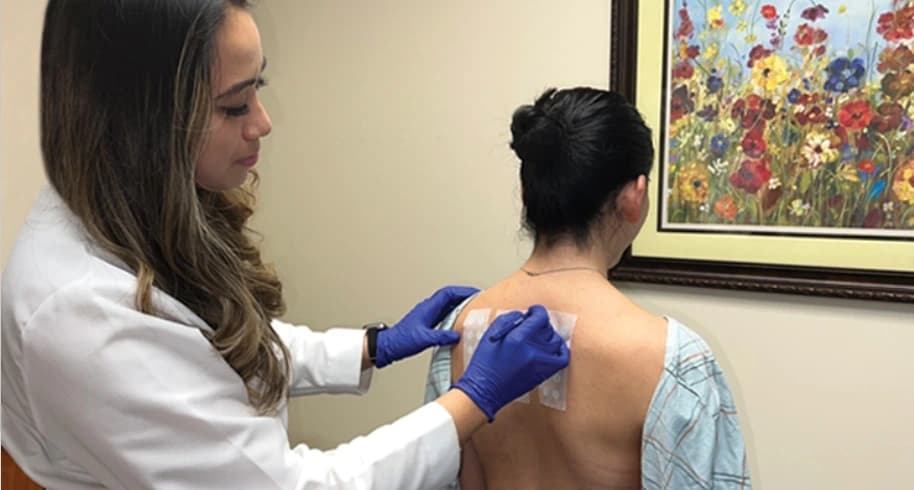
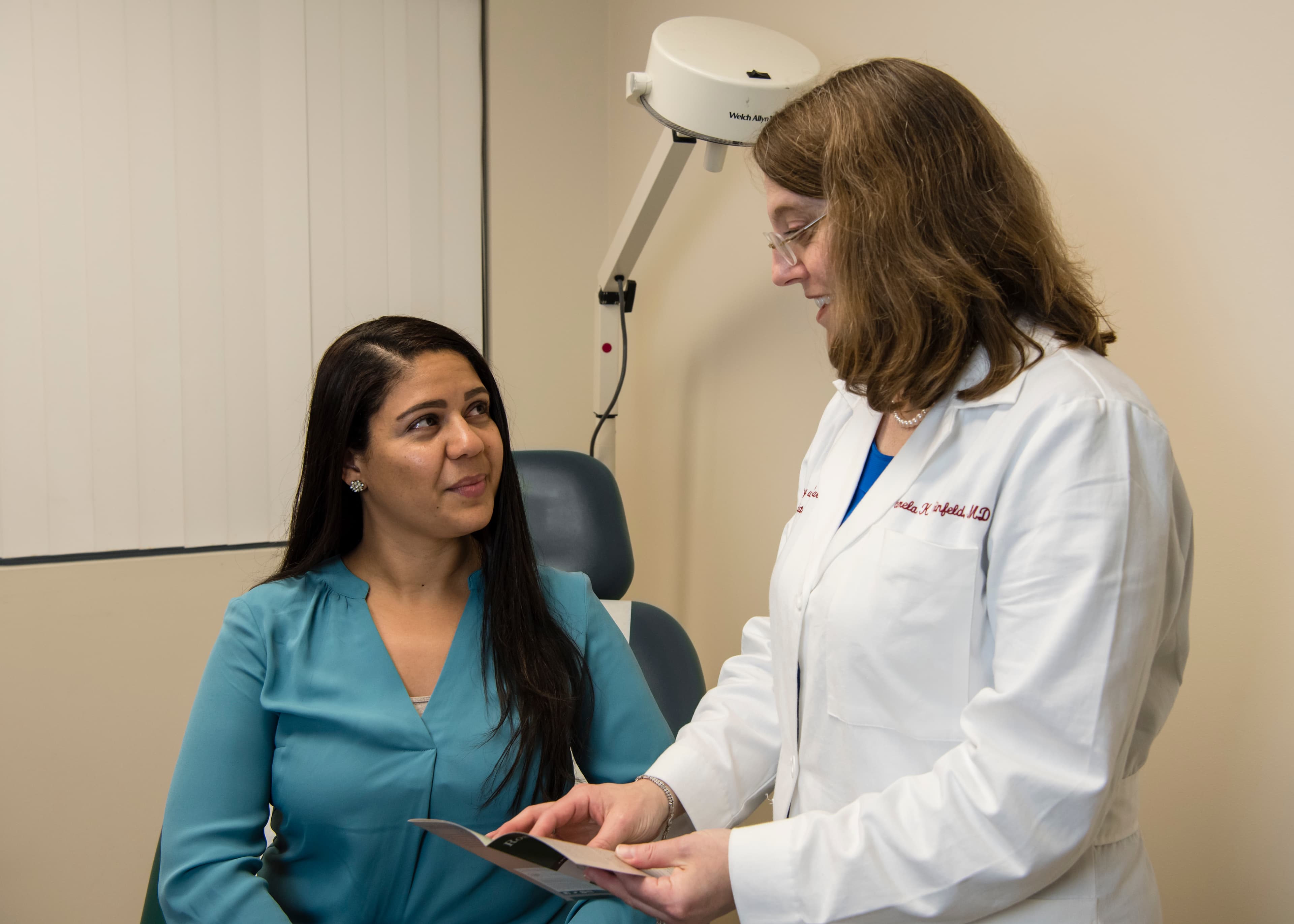
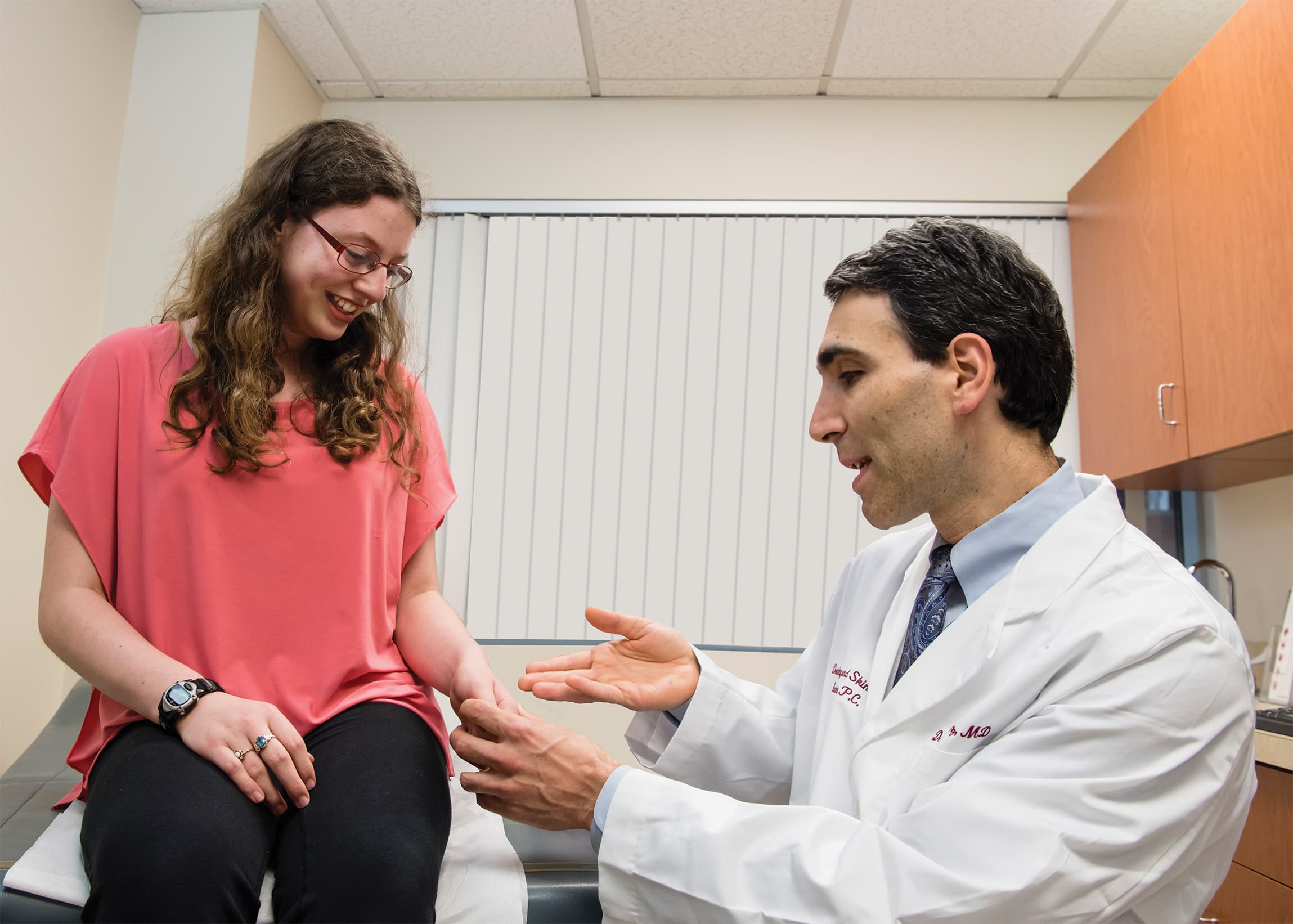
First, you'll meet with one of our expert dermatologists. Prior to this visit, you'll provide us with a list of all the products you use at home, together with the ingredients listed on labels. At the visit, we'll explore possible exposures to allergens — at home, at work, and during your leisure time and hobbies. This guides our choice of which chemical series to test.
- No sunburn in the area where the patches will be applied.
- No UV (ultraviolet) treatment within 3 weeks of patch testing.
- For 24 hours before patch testing, avoid applying any creams, lotions, or chemicals to the test areas — most commonly the back.
- For 1 week before patch testing, no topical corticosteroids on the test areas.
- For 2 weeks before patch testing, no injectable corticosteroids.
- If you take oral steroids or any medication that suppresses the immune system, discuss with your doctor in advance — some low-dose regimens may be allowed, but they need to be reviewed first.
- Over-the-counter antihistamines may be continued before and during the testing.
- You will not be able to take a full bath or shower during the testing week — bathe or shower the morning of your first appointment.
Beyond the TRUE test —
a deeper search
Patch testing can be done with a simple panel of allergens (called the TRUE test), but the TRUE test only screens 35 substances. Expanded patch testing has been shown to greatly increase the number of positive reactions — in some cases, nearly 50% of these reactions are only found when testing is performed with additional allergens not present in the TRUE Test.
At Dermatology and Skin Care Associates, you will be patch tested with at least a standard panel of 80 allergens we call the Modified American Contact Dermatitis Society Core Screening Series. This series covers allergens such as fragrances, metals, dyes, preservatives, rubber products, and many more. We also have the capacity to target additional allergens based on your specific history — including bakery and cosmetic series for foods, hair color, and additional skin care product additives.
“I had been living, for years, with a persistent and uncomfortable head and face rash. The follow-up appointments were very thorough and extremely informative. My journey to a clear scalp and face is a ‘work in progress’ but at least 80% better than it has ever been! I absolutely credit that to Dr. Weinfeld and the professional care I am receiving.”
Some allergic reactions cause symptoms up to 48 hours after exposure
Patients can sometimes have atypical symptoms such as gastrointestinal symptoms, trouble breathing, or nasal congestion — discovering the underlying allergens may improve these symptoms, too.
Explore the full range of care.
Monday – Friday
8:30 a.m. – 5:00 p.m.
(781) 235-8155
Patch testing led by Dr. Pamela Scheinman
Patch testing takes place in our office over three approximately 1-hour visits during the course of one week — typically Monday / Wednesday / Friday or Monday / Wednesday / Thursday — followed by digital photos of the testing sites the following Monday to assess for late reactions.
Most medical insurance plans cover patch testing. Our team will help verify your coverage before your first visit.
Call us to determine
if patch testing is right for you
Request an appointment and our team will reach out within one business day to confirm a time that works for you.
See what our patients say online
Reviews from real patients across Wellesley, Newton, and the Greater Boston area — pulled directly from Google and other public sources.